

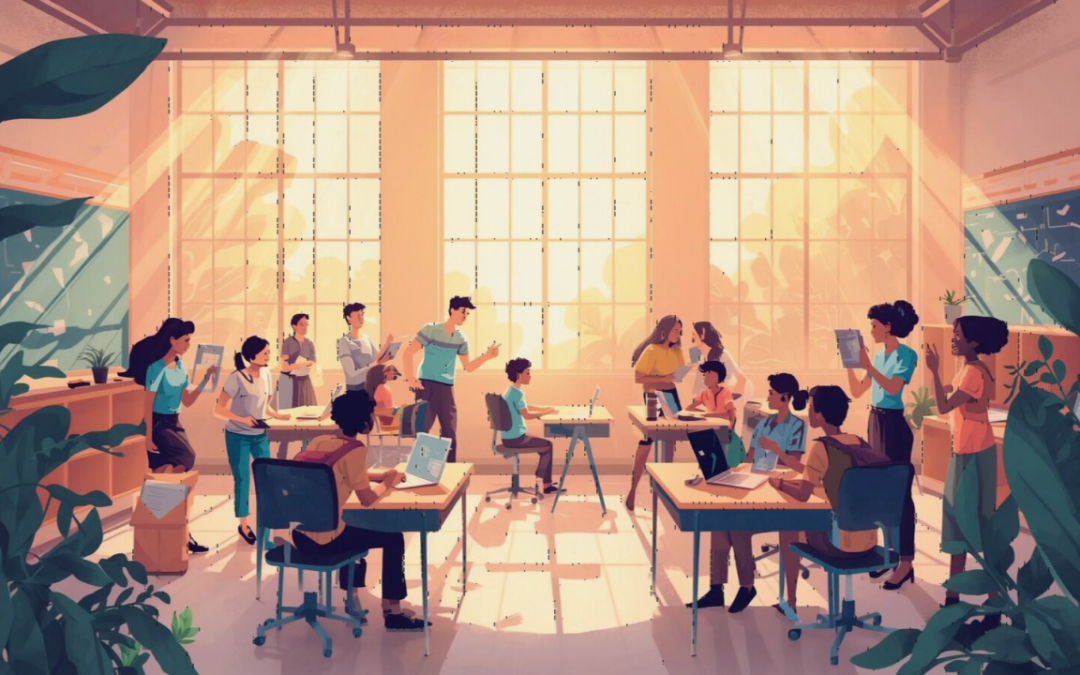
In the fast-paced world of K-12 education, we often get caught up in the “what” and the “how”, curriculum standards, assessment data, and technological integration. But if you ask any student what changed their life, or any teacher why they stay in the profession despite the challenges, they won’t point to a spreadsheet.
They’ll point to a moment.
The Power of Belonging
At the heart of every impactful educational experience is a sense of belonging. Belonging isn’t just “fitting in”; it’s the psychological safety that allows a student to take a creative risk and a teacher to bring their authentic self into the classroom.
When we prioritize Moments That Matter, we shift our focus from mere instruction to human connection. These are the micro-interactions—a shared laugh over a mistake, a quiet word of encouragement during a tough week, or the collective “aha!” moment during a difficult lesson that build the foundation for deep learning.
The Secret Sauce: Mutual Flourishing
For too long, the narrative in education has been one-sided: the teacher pours into the student until the teacher is empty. This is unsustainable. The “magic” happens when we strive for mutual flourishing.
The Old Model The Mutual Flourishing Model
Teacher as a “resource” to be used. Teacher as a co-learner and mentor.
Student success is the only metric. Wellness for both parties is the priority.
Compliance-driven environment. Connection-driven environment.
Burnout as a badge of honor. Sustainability as a core value.
When teachers feel seen, supported, and valued by their leadership, they have the emotional bandwidth to create those same conditions for their students.
Impact isn't a trickle-down effect; it's a reciprocal cycle. When the teacher flourishes, the classroom becomes a greenhouse for student growth.Creating the Impact
How do we move from theory to practice? It starts with intentionality:
- Celebrate the “Small” Wins: Acknowledge the breakthroughs that don’t show up on standardized tests. This should come from the administration, fellow colleagues, parents, and the community.
- Prioritize Human Connection: Dedicate time for check-ins that have nothing to do with the syllabus.
- Design for Agency: Give both teachers and students a voice in how their learning environment functions.
The Bottom Line
Education is, at its core, a human endeavor. We aren’t just transferring information; we are building a community where every individual feels they belong. By focusing on the moments that matter and ensuring that our educators are flourishing alongside their students, we don’t just improve test scores; we change lives.